
Guide 3A Evidence
Products
Quiz, Media, & Portfolio Directions
Review Evidence Contents
Evidence Objectives

Forms of Data
Provide examples of different forms of data about the natural world, including the types of information data can convey; discuss the techniques, benefits, and limitations of sampling from a larger population; and list and explain the basic characteristics of grasses, including ability to survive extreme conditions and significance in the human diet.

Patterns
Describe what a pattern is and provide examples of patterns in nature; analyze different forms of population data including a population size chart, carrying capacity, and population distribution; and provide the names, locations, and characteristics of temperate grasslands.

Field Notes
List the contents of field notes and explain why these contents may be important; describe the tropical savanna, including climate and seasonal impacts on organisms; and provide an example of a temperate savannah, and explain why it is not a forest.

Identification
Explain why it is important to identify and classify organisms; describe the work and contributions of Carl Linnaeus; and list the three Domains of life, and the four Kingdoms in Domain Eukarya.
Evidence Quiz
Quiz Directions
Complete all four sections and take the quiz on Canvas.
Use the learning objectives above to guide your studying.

Evidence Media
Introduced in Patterns section of this guide:
Population Quadrat
For this media piece you are making your own quadrat and collecting population data.
First, construct and use a quadrat to sample a portion of a population within a larger space. The quadrat could be string, rulers, pencils, etc. Just keep track of the size of the quadrat so you can extrapolate your data collection within the quadrat to the larger habitat.
Collect data on the organisms in the quadrat. You are collecting data to answer:
-
What is the population size?
-
How is the population distributed?
If you can not go outside, you can create your own habitat to sample (for example a room) and add your own population of “organisms” to sample within the quadrat. You can be creative!
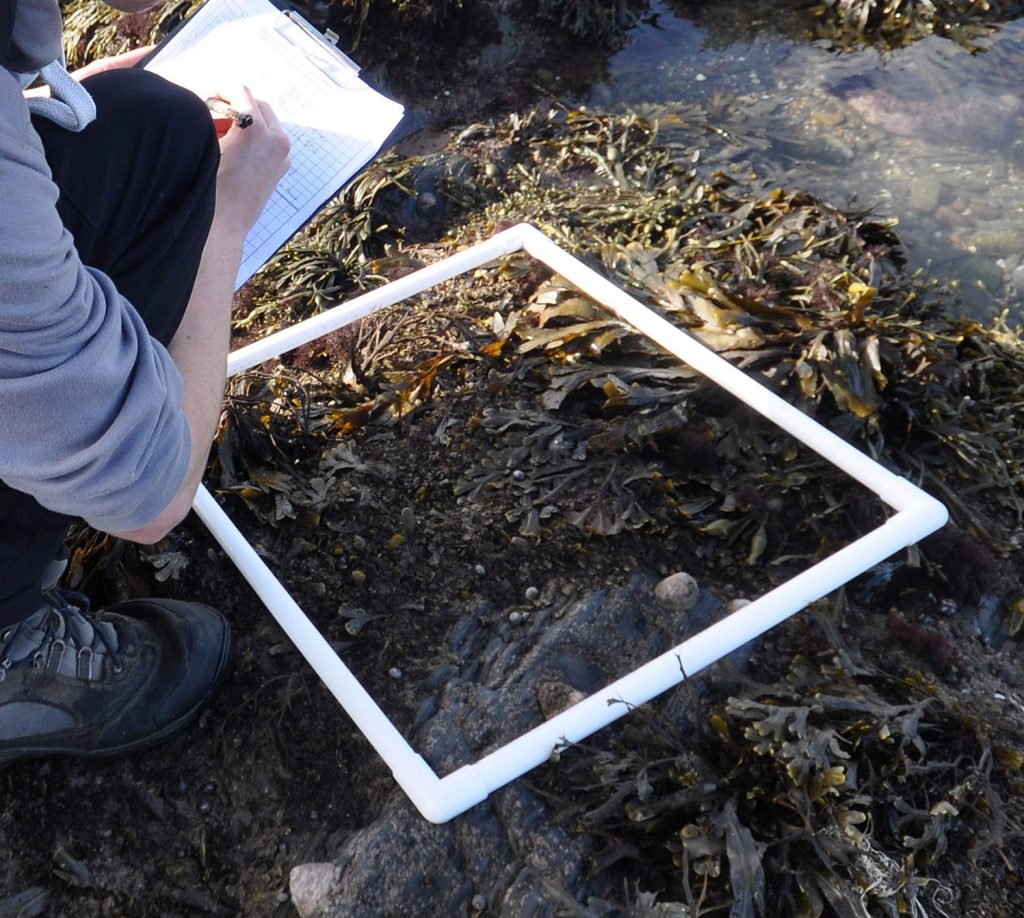
You are submitting a write up of your results that includes: researcher name(s), location, weather, date, time, the number of organisms in the sample quadrat, the extrapolated number in the entire location and distribution of organisms in the population.
Use a combination of writing and images (photos and/or sketches).
Media Directions
To be completed after taking the quiz on Canvas.
Upload your quadrat data to Canvas. Your work can be submitted as a PDF, a word document, a photo of the notes, or even a video. Multiple assignment formats are supported.
Portfolio
Portfolio Directions
This guide’s media piece is a perfect fit for your final portfolio. You can include your quadrat construction and data collection as an example of field work skills.
Learn more about Evidence
If you would like to learn more about the topics introduced in this course, please visit the resources page.

This Module
3: Data

This Guide
3A: Evidence